The Rumpus Interviews Neela Vaswani

Read this interview with Neela Vaswani; mixed writer and activist who is coming out with a new book.

Quote from the interview:

Rumpus: You begin your memoir, “This place, that place. You have to stand someplace. I pledge allegiance to the in-between.” Being of Irish-American and Indian descent, you write that while growing up, you often felt a sense of division and separateness in your own skin, like there was a war in your body. Did writing this book help you reconcile the duality of “this place,” and “that place,” and embrace the gray “in-between?”

Vaswani: The point of the book is that when you’re a certain kind of person, you’re born embracing the in-between, because you are the in-between. And therefore it’s not a gray place at all. It’s a vivid place. It’s as real and contoured and legitimate as this place or that place. I think it’s society and the human tendency towards rigid categorization that gives the in-between a sense of division or incompleteness. I already knew this and lived it before writing the book. But in writing the book, I found a way to voice it to other people.

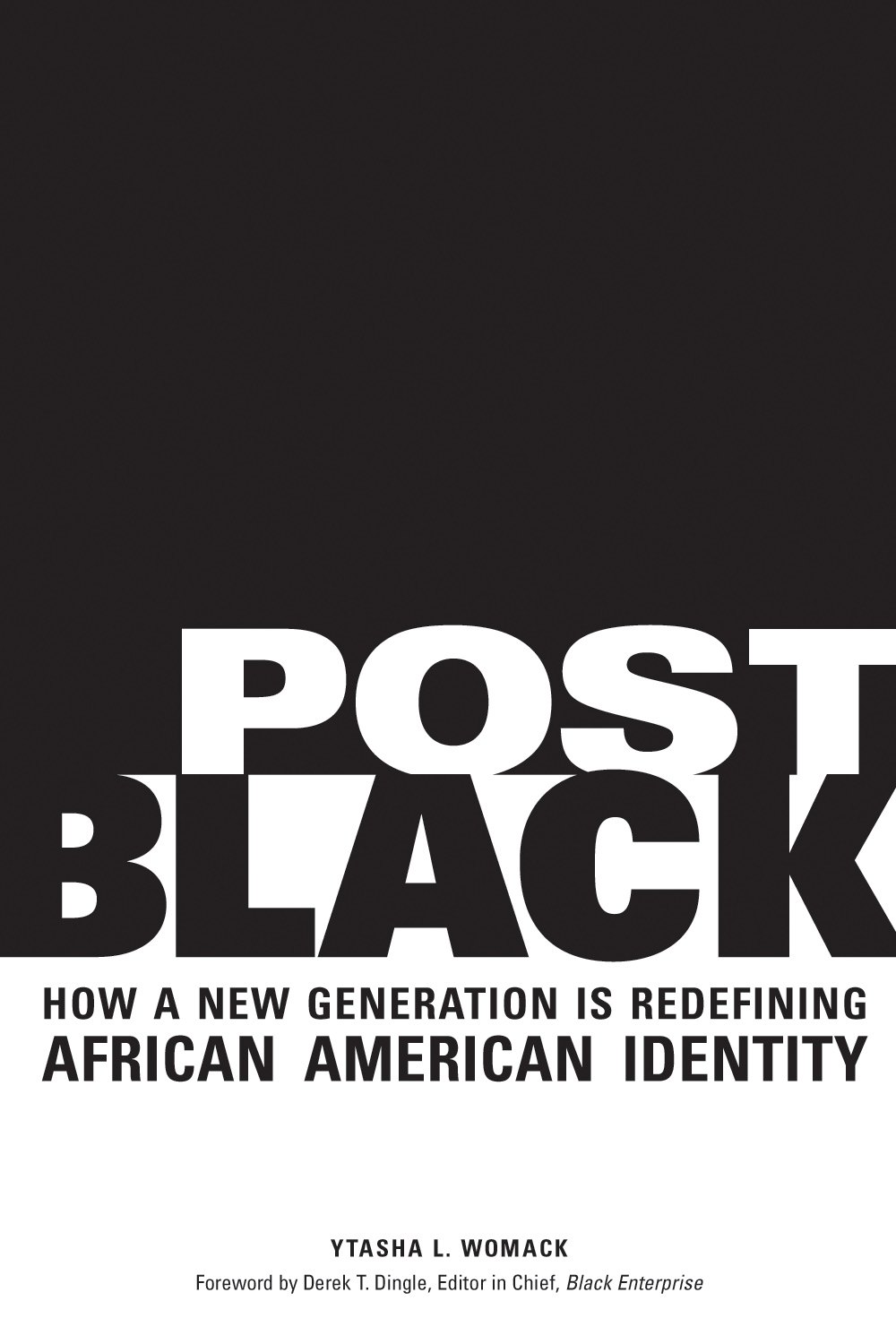
Read This: Ytasha Womack, Post Black

Womack takes a refreshing look on African-American identity in the terms of the Generation X and Y’ers who are creating new communities that defy old stereotypes. From personal experience, interviews and research, she examines young black entrepreneurs, biracial/multiethnic youth, GLBT black youth, artist communities, and feminism in today’s black culture. Womack’s writing is readable and engaging as she illuminates parts of black identity that have no voice in our mainstream culture.

  • Post Black is about emerging groups, both violent and forceful, whose voices and issues are entrenched in communities but are not a part of the social agenda, public discussion, national politics, or collective black identity” (23).

Read the introduction and first chapter here on Google Books.

And here is the blog Womack started for the book.

Crossing Racial Lines: Geography of Mixed Race Partnering & Multiraciality

PDF article link here

Various professors of geography collaborated on this article that explore the regionality of mixed race households. The essay explains the descriptive language used in identity people of mixed race and “Contemporary Mixed Race Geographies.” It reveals that despite the known multiethnic background of different populations, only 3% chose that status on the 2000 Census; most likely to their own racial experiences and formation of identity. A great academic read.

“As the ‘process of racial labeling starts with geography, culture, and family ties and runs through economics and politics to biology’ (Spickard, 1992: 16), everyone’s racialized identity has an individual (private) genealogy too. We can look to our ancestors, assess their racial backgrounds, and then, according to a conception of blood, establish our personal racial identities” (7).

“The 1990 Census reported that 17.6 percent of all black unions occurred with whites” (15).

“Today, racially mixed marriages are more than twice as likely in California — the major immigration state — than in the nation as a whole” (18).