Reader Sumission: Poetry by Rage

Thank you to Rage for submitting the great poems below, and be sure to check out her work in Other Tongues: Mixed Race Women Speak Out. Check out the submissions page to get our work featured!

You Could Be Halle Berry’s Sister!

brown is my allowance:
the quick, tinning sound
of nickels into jar.
I have earned this much

my sister says
of color, turns down
her mouth’s corners only asking
why
would you say that?

her father and mine
only sometimes ours
having never made eyes
with a question mark
has not asked of anything

there is no curiosity.
no lantern light.

brown is my allowance
accruing in silencelessness
or my recoil-
the imminent withdrawal

awarded only pennies worth
of power
where my back meets
these hips

effortless rhythm rinsing
into shoulder blade
deepening broad muscle
an unpacking strength

a cashier asks
Hezekiah? Israeli?

No. And Thank
You.
And Good
Bye.

We Are All Human!
my White mother says
(her bra-less picture in
my kitchen)
A Black Man is President!
Our Arrival.

My hand still open
snatching at pieces
of lantern light,

lightening bugs
in mason jars
where I keep
my coins.


Tinderbox

its worth is a helix
strands all gathered up
the hand-me-down
tinderbox
found here

this was not a chosen sleep
its narcoleptic drift left
me drug-spent
rubbing unwelcome sunlight
from these eyes

and watched you bless the wine
and bread
wash
and     bless the wine
and bread
and I absorbed new language

cultureless as my father
in all his appropriation
collecting his heritage
as it is marketed to him

When I ask if he is Black
his eyes find new horizon
shadowed there
There are places
wide enough for this largess
its expanse

but even there
unexpected weapons hid
beneath the place I slept

it was still a tinderbox
there the ones that loved me
weren’t quite so apt
to fondle matches

Songs Feet can Sing

Mother fed me on folk music
breastfed me barefoot
Celtic crosses hung between clavicle
my brown neck
their throne

My Feet as the Bodhran
laced in archaic shoe
traced and marked wooden floors of Irish pubs
these dark curls bouncing
with treble reel and jig

Brownness between pale skin and freckle
The features of this face
oblivious to its origins

In the passing of years
My rigid upper body
begs the tales of my ancestry
Pulling island songs from my father’s pocket

When I tug his linen shirts
he plays me Harry Belafonte
brings me to my grandfather’s backyard

This large man, strong bones
cooks up jerk chicken, rice and beans,
makes sweet drink
“how’s everyting?
good good good.”

I find my hips and let my hair down
hear my father’s hands upon tightened skins
drum circles pulsing of djembe and conga
my core heated with dance

Movement has always been my medium
This body of the Moors of Ireland
This body of the West Indies
This body, dancing.
Dancing.

BIO: Rage is a queer, BlackIrish, sister, and former/current farmer, dancer, baker, doula and poet.  She revels in the magic of words, food, and children and loves to play with them all.
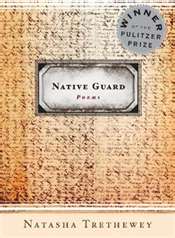
Natasha Trethewey, Native Guard


  Trethewey pays tribute to both her mother and to her home in the South in this Pulitzer Prize winning poetry collection. Through these poems, Trethewey navigates the empty space between the living and the dead. She questions what information still lives, and what is cast into history. Even further, what part of that history remains in memory; what still clings? In “The Southern Crescent,” the narrator embraces the idea of transience, but as “she is leaving behind/ the dirt roads of Mississippi, the film/ of red dust around her ankles…” remains, a marker of where she has been. It is left to the reader to determine how far this woman can truly get from where she’s come (5). Trethewey doesn’t forget the flourishes of poetry, she is a master of form, using different sonnet and rhyming structures in “Myth” and “Graveyard Blues.”

Towards the end of the collection, Trethewey delves into the subject of identity, particularly referencing the interracial marriage of her own parents in the context of the South. In both “Miscegenation” and “My Mother Dreams Another Country,” she writes in a very matter of fact tone, tracing history as if drawing a timeline. “My Mother Dreams Another Country” focuses on the issue from her mother’s point of view, and how she watches the world change: “already the words are changing. She is changing/ from colored to negro, black still years ahead./ This is 1966 – she is married to a white man -/ and there are more names for what grows inside her/ It is enough to worry about words like mongrel/ and the infertility of mules and mulattoes/ while flipping through a book of baby names” (37).

Trethewey keeps it honest, as in “Blond,” where the possibility of what she could have looked like is explored; how each different variation in skin tone or hair color could have changed her experience in the world. While writing with an admiring respect for the history of the South, Trethewey is not afraid to expose the contradictions that work to limit those she identifies with. She writes in forms that celebrate the history of poetry that keep the language accessible to the reader.

On a personal note, Trethewey visited my school during our last residency in December. She spoke freely about her experiences in an MFA program and her passion for writing about race. She mentioned how she was discouraged from “writing solely about her people” and was told to “unburden herself” from her ancestry. This hit me hard, having experienced the same kind of criticism from a mentor who was assigned to me in my program. Trethewey mentioned that part of her impetus to write Bellocq’s Ophelia, (her 2nd book of poetry), was to push these issues onto a removed outlet that would be listened to – something of specific and intriguing historical context. During her talk, she encouraged us to become the writer we feel we are meant to be in spite of what others say. And especially as a writer of color, you have to know yourself even more. That our real teachers are those we seek out and read. Trethewey is one of those real teachers for me.

So of course, watch/listen to her read poetry – this video from last year’s Cave Canem. Her next collection, Thrall, with be out Sept. 2012

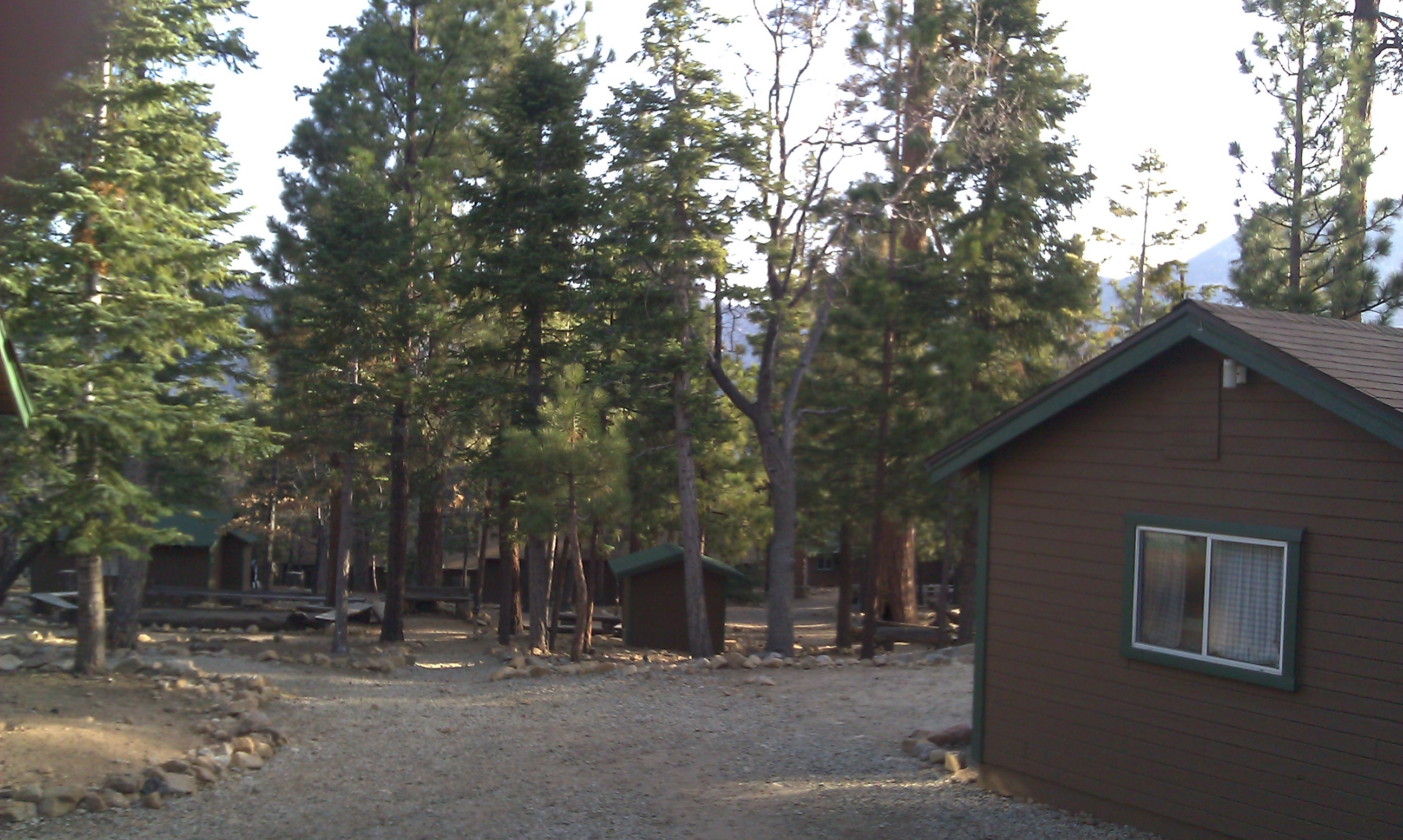
I have feelings and they are about camp.

So this blog is normally used for my feelings about mixed-ness and such. But when something happens that changes you forever, you write about it, right?

I went to camp. Not just any camp. A camp full of amazing/diverse/mixed/queer/artsy/intelligent people. It challenged me and saved me and made me cry.

Maybe because I surrounded by people who were so accepting that I kind of shut down since I am so used to censoring myself and/or parts of my identity. I determine who I am on my surroundings, and code-switch to fit what is expected of me. I realized I have to face all of my truths and live in them because what else is there? And yet, I don’t know how to get there, or I’m scared to or I haven’t figured it all out.

Vague enough for you?

Here’s what’s true and shareable: I met some amazing women – artists, writers, travelers. There’s a few whose stories and words and faces I will always carry in my heart. I talked about writing with poets, journalists and bloggers that I read every day. I will always be in awe of them. I did fun, silly camp things like cutting t-shirts and making friendship bracelets surrounded by women who were willing to talk about everything. I listened to panels about gender and race that opened my mind and gave me words to express feelings I didn’t know I carried until that very moment.

Things that make me nervous to say: I had a panicky rush of emotions. I cried because I was overwhelmed. I was worried that I could never fit in with all these people  – that I had conditioned myself enough to not be able to let go. Then I drank and danced a bit on Saturday and let go a little too much than I was used to.  I threw myself into this extroverted mood and at the end of it felt unsure of who I really was. The girls I had talked to most sat down and observed all that was going on. I wanted to freeze time.  I couldn’t decide which place I wanted to be in until it was too late. Either way, I was amazed by the presence of all these people, and hope I made connections that will last.

Things I will never forget: Staying up late with my cabin mates. Campfire. Songs. Talent Show. Powerful poetry. Sharp opinions and open hearts. Getting spray paint all over myself. High Tea. Group meals. The teeny bits of gossip that evolve in two days. Freezing cold water. Writing circle. Zine making. All of the wonderful, beautiful conversations with new people.

What I mean is that I loved it. I would go again and again.

Camp has inspired me to get back to some personal writing. To really explore the intersections of identities, hash out all the bullshit, and live a full life.

There is so much to say about all of this. There is so much. This was everything. I have the courage now to push forward.