Sarah Jones

The New York Times recently did a profile on Sarah Jones, a playwright and performer whose one-woman shows have captivated audiences. Her 2006 show, “Bridge and Tunnel”, won a Tony Award. About her identity, she explains:

“My grandmothers are Irish-American and German-American; my grandfather is from the Caribbean,” Ms. Jones said. “My father is African-American. My family looked funny. I just started naturally imitating whoever I was talking to. I didn’t want to be a phony, but I felt very authentic in the moment. I don’t think of it as having a fractured self, but as having many interconnecting selves, concentric identities.”

Here’s a video of her work featured at a TED conference:


Writing about Mixed Race

For one of my final papers in school, I studied several academic books and articles to write about the mixed race experience. here is my conclusion to the essay I wrote:


As a mixed person, I have felt a lot of factors influence the development of my own identity. My surrounding community as a child was primarily black, in a Southern Baptist church; my white mother spent a lot of time and energy to try to integrate herself into that community for the sake of her mixed children. I was more light-skinned than my other siblings, and as a child often received comments from adults that it made me the most beautiful, which led to teasing and bullying for not only black kids in the community, but sometimes between my siblings. I always wanted to be darker, to fit in. As a teen interviewed in Gaskin’s book said, “If you’re dark, or can get dark, you don’t really have to deal with that- that physicality of not being able to look like who you are” (Gaskins 41). I have periodically used a hair relaxer to straighten my tangled and poofy curls to fit in with my friends, and to be able to wear my hair down. I do not feel personally exempt from the representation of the tragic mulatto, and often sought out literature about mixed race characters for guidance. It continues to be a slippery slope, but I do feel more aware of racial injustices, and thus more compelled to speak out against them.

Having a secure, integrated identity entails a long process that can be challenged by being a mixed race person.  But there is enough evidence, through the study of recent ethnographic material and literature, that mixed race identity is moving beyond the representation of the tragic mulatto and the exotic temptress. It is not so much the case that is being multiracial is the best of both worlds or hip, as the 1990s ads would have people to believe, and that black scholars in the same decade fought against. New multiracial organizations, books and media continue to come out in our evolving society.  Is multiracial or mixed to become a new racial category? Or does it perpetuate the U.S.’s own kind of caste system to affirm a category? What is the alternative for a person of mixed race? Spencer’s book concludes that because of the unique experience of being mixed in the U.S., multiracial do not feel current efforts are enough. He writes: “The problem is that mixed race people do not feel like full American citizens because of the discrimination they have historically faced as a result of the persistent old fashioned ideas about miscegenation. Perhaps this is why [they] are pushing for a multiracial identity rather than for the right to call themselves American” (143). It is central, despite the solution to this problem, to break down the traditional stereotypes of mixed race people, and to as a society, support the full development of an integrated identity.

A Few Mixed Tumblrs

Since the micro-blogging platform Tumblr has become so popular lately, I’ve decided to link some of my favorites that feature mixed issues/stories/pictures.

1. Mixed Dreams: some may recognize the title from the blog Mixed Dreamer – written by Nicole Nfonoyim. The tumblr site is an extention of her blog, and always full of interesting links.

picture from One Hundred Percent

2. One Hundred Percent: This tumblr is decribed as “illustrated documentary about what it means to be mixed.” It features art and answers to their mixed questionnaire that readers can submit to. The responses so far are honest and engaging.

3. The Daily Multiracial profiles multiracial celebrities, artists, musicians and athletes

4. Half & Half

5. It’s always fun to see young mixed faces. Check out Mixed Race Babies; an all-photo blog of mixed kids and families.

Mixed Roots Festival in NY Times!

Check out this great article in the NY Times featuring the Mixed Roots Festival!

It was an amazing experience, and I am so grateful that they invited me there. Chatting with Susan Straight, Nina Revoyr, Esme-Michelle Watkins, and Kip Fulbeck was incredible. I sat in on a lecture with Steven Riley and G. Reginald Daniel – two of the leading academics of mixed race studies. Danzy Senna’s reading brought out my inner literary fangirl.

I hope to post more about it as I get back into blogging regulary. In the meantime, here’s what I did there:

Check out other videos from the event on the Mixed Chicks Chat Youtube Page

AND! I finally got my own domain – so you can read this blog at mixedreader.com!

Out Today: Danzy Senna’s New Book

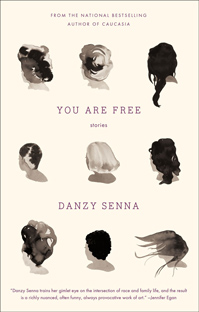
Be sure to hit up your local bookstore and pick up Danzy Senna’s new story collection, You Are Free. I am very excited to dive into this one, it has already received some good reviews! Check it out here, or also see Senna’s website.

Also! Be sure to stop by the Mixed Roots Film & Literary Festival’s fundraising site on Indiegogo and donate what you can! This is such an important event for mixed stories, and I am SO excited to be doing a reading there on June 11th; especially considering I will be in the amazing company of some of my writing heroes, such as Nina Revoyr & Susan Straight!

Sarah Jamila Stevenson, The Latte Rebellion

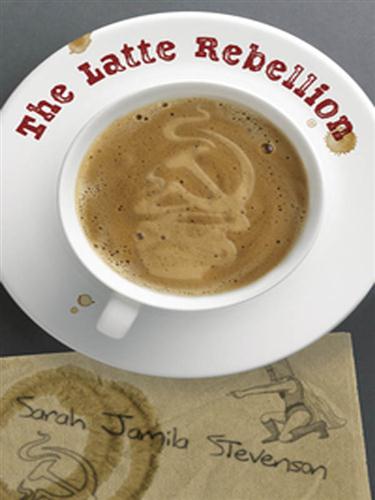
The young adult novel is a perfect place to find relatable, accessible mixed race stories. In fact, more YA books are featuring mixed kids that ever before. Recently,  I picked up a copy of The Latte Rebellion by Sarah Jamila Stevenson. I loved the spunkiness and drive of the main characters. The story follows high school students Asha and Carey as they create and anonymously sell T-Shirts to raise money for a post-graduation trip. The shirts promote “The Latte Rebellion;” a club they form to promote mixed race awareness. The idea catches on, and as the girls try to juggle finishing high school and teenage social dilemmas, they find themselves with a mini-revolution on their hands!

  • “We’re mixed up. We’re not really one or the other, ethnically. We’re like human lattes” (13).
  • “The Latte Rebeliion wouldn’t have gotten as big as it did if it hadn’t been needed. Sir, do you realize there are people out there who still think that to be proud of being mixed-ethnicity is somehow un-American?” (115).

Check it out, it’s a fun, engaging read. Also, see the website created for the book! Sarah was gracious enough to answer some questions about herself and the book for this blog!

 Can you tell me a little about your background? Do you identify as mixed? Are there any characters in the novel you relate to most?

I definitely identify as mixed. My dad was born in India and grew up in Pakistan before moving to London as a young man, and my mom was born and raised in California and is of mixed European descent, primarily Czechoslovakian and English/Irish/French Canadian. As a kid, I never knew what exactly to tell people if they asked me what my background was. I’d ask them if they wanted the long answer or the short answer!As far as my novel is concerned, I can’t say there’s any one character I identify with the most, but there are parts of me in Asha, Carey and Miranda. Asha has a lot of my uncertainties and insecurities, but in other ways she’s much more ambitious and driven than I was in high school. Like Carey, I was pretty school-focused and college-obsessed. And, like Miranda, I was one of very few people in my group of friends who specifically wanted to go into the arts.  Unlike any of them, I was never involved in a disciplinary hearing!

As a Northern CA resident, what challenges and/or advantages do you think mixed race people face here? What inspired you to set the book in Northern CA?
I think that the advantages and challenges overlap a bit. The question of ethnic identity is complex–there are innumerable subtleties to anyone’s background and experiences–yet, as Asha points out, ethnicity can never really be the entirety of someone’s identity. Here in Northern CA (and most places in CA), it’s a wonderful bonus to be able to interact with so many people of varying ethnic backgrounds, of mixed race, of different cultures and religions. At the same time, that diversity is a challenge because it’s easy for an individual voice to get lost, for an individual person to FEEL lost, especially if you don’t feel like you fit perfectly into one single category. That sense of individual difference can be a challenge. It can also be a strength, of course.

These are some of the reasons I did choose to set the book in Northern CA–it makes for a very dynamic setting. On a more practical level, most of my stories are set in California because I was born and grew up here. So I know the setting much more intimately than anywhere else and feel like I can do it more justice.

Many of the latest books about mixed race are YA books. Why do you think this is?
One of the primary reasons, in my opinion, is that young adulthood is a time of questioning, of exploring, of beginning the long ongoing process of figuring out who you are as an individual human being and where you belong in this world. Coming to terms with your ethnic identity, your family and where you come from is often an important part of that. I’ve noticed that even books written for adults that involve mixed race have a huge coming of age component–Cutting For Stone by Abraham Verghese, White Teeth by Zadie Smith, just to name a couple.
What is your favorite book featuring a mixed character other than The Latte Rebellion?
I really did love White Teeth–it was an eye-opener for me in terms of the possibilities of writing about mixed ethnicity, and the story also really resonated with me personally. In YA books, Justina Chen’s Nothing But the Truth (And a Few White Lies) was also inspiring and thought-provoking for me, and came along at a critical time when I was working on The Latte Rebellion.
Can you tell me more about your blog, Aqua Fortis?

Aquafortis is my personal blog. I started it as a way to stay in touch with friends who had moved out of the area, but it’s evolved into more of a space to share my thoughts, ideas, artwork and writings–at least from time to time. I wish I had more time to devote to it, but most of my blogging energy is spent on the team blog I contribute to with author Tanita Davis–Finding Wonderland (http://writingya.blogspot.com). We post about YA literature and writing, including book reviews of YA novels, and we’re particular fans of multicultural fiction, fantasy and sci-fi, and graphic novels. We’ve been blogging there since 2005.

Jenoyne Adams, Resurrecting Mingus

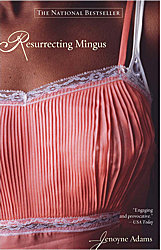
In Resurrecting Mingus, Adams writes in a style that bends the boundary between popular and literary fiction – a very readable, fluid narrative that switches point of view between Mingus (the main character), her mother Ellie, and her father Carl.  Mingus is a lawyer stuck between her divorcing parents and her jealousy-prone sister, Eva. While being challenged to chose her loyalty to one parent or the other, Mingus finds herself enveloped in a relationship with a new man who makes her question her own beliefs about love, and about her biracial identity.  Here’s some “mixed” quotes:

  • “Sometimes Mingus used to think there should have been a special dining cage in resturants for biracial families. …As they ate, people could gawk and turn their chairs to get a better view” (30).
  • (Mother’s point of view) “Curly haired combinations of me and Carl. i used to want to take them home ot my father and let him see how wrong he was. Let him seethat white and black did mix, perfectly, into two little girls” (156).
  • “Mingus had always felt more black than white. But there was something about what Eric said that unnerved her. Like he was denying that a part of her existed. That same part that she had denied many times herself” (159).