The daughter of Alice Walker and Mel Levanthal, Rebecca grew up between city and suburban neighborhoods after her parents divorced. She tries to negotiate her identity as she passes through these places, through different friends and lovers, and through others’ perception of who she should be. Her writing is so fluid, and accessible that it is very easy to place yourself in her narrative. I embraced the experiences she describes and felt the growth she writes about in adulthood. Walker is explicit about her feelings in every situation that deals with race; the reader must navigate the narrow path of mixed-ness with her, and is forced to understand.
Words:
“I am a Movement Child. My parents tell me I can do anything, I can be anything I want. …I am not tragic” (24).
“Bryan Katon, the boy that I like, tells me he doesn’t like black girls, and I think…I am, a black girl? I don’t know what I am and don’t know how to be not what he thinks I am” (69).
“There is an awkwardness to my body, a lack of grace, as if the racial mix, the two sides comign together in my body have yet to reconcile” (255).
Various professors of geography collaborated on this article that explore the regionality of mixed race households. The essay explains the descriptive language used in identity people of mixed race and “Contemporary Mixed Race Geographies.” It reveals that despite the known multiethnic background of different populations, only 3% chose that status on the 2000 Census; most likely to their own racial experiences and formation of identity. A great academic read.
“As the ‘process of racial labeling starts with geography, culture, and family ties and runs through economics and politics to biology’ (Spickard, 1992: 16), everyone’s racialized identity has an individual (private) genealogy too. We can look to our ancestors, assess their racial backgrounds, and then, according to a conception of blood, establish our personal racial identities” (7).
“The 1990 Census reported that 17.6 percent of all black unions occurred with whites” (15).
“Today, racially mixed marriages are more than twice as likely in California — the major immigration state — than in the nation as a whole” (18).
“Things I learned from kids in school: …people with dark skin looked like that because they were dirty. Dark-skinned dirty people were more likely to be criminals than anyone else. …Mixed-race people are signs of the End Times, when the Anti-Christ would return and rule on earth for a thousand years of bloodshed and turmoil. The presence of my brother and me in school and in town was definitely Not a Good Sign” (80).
“By the time I was fifteen and a half, I had given up trying to fit in here. I was merely trying to survive. The stares people gave me were changing. Now grown men sidled up to me on the sidewalk, came up to me after church gatherings, at community picnics, at wedding receptions. They wanted to tell me about the hookers they’d known in Vietnam, on R&R in Thailand, in the Philippines, in Taiwan” (138).
These quotes caught my eye in May-Lee Chai’s, Hapa Girl. The book primarily circles around the story of Chai’s parents, and their triumphs and fails as a nomadic family. One of the roughest places socially for May-Lee and her brother Jeff is in South Dakota, where their family settles on a farm while the father works at a university. The top quote comes from that period in Chai’s life – from the children of that Midwestern school. There is such an interesting dynamic between her parents; and the struggle for them to be successful in the academic world pulls the narrative along.
Check out May-Lee Chai’s website for more about the book, her bio, and an interview of her reading from it.
Half and Half is a collection of essays from writers who are biracial and/or bicultural. The book includes big names such as Julia Alvarez, Malcolm Gladwell, David Mura and Danzy Senna, among many others. Senna’s piece is my favorite in the first half of the collection; “The Mulatto Millennium” a tongue-in-cheek exploration of the “it’s hip to be mixed” stereotype. There is a lot of important material in the book, so I’ve broken it into two parts.
From Claudine Chiawei O’Hearn’s Introduction:
“Because most people didn’t know where to place me, I made up stories about myself. In bars, clubs, and restaurants I would try on identities with strangers I knew I would never meet again” (ix).
“What name do you give to someone who is a quarter, an eighth, a half? What kind of measuring stick might give accurate estimation? If our understanding of race and culture can ripen and evolve then new and immeasurable measurements about…our identities become possible” (xiv).
Danzy Senna, The Mulatto Millennium
“Strange to wake up and realize you’re in style. …I woke to find that mulattos had taken over. They were everywhere” (12).
“Mulattos may not be new. But the mulatto-pride folks are a new generation. They want their own special category or no categories at all. They’re a full-fledged movement, complete with their own share of extremists” (14).
Francisco Goldman, Moro Like Me
” One of the first things I actually figured out was this: it doesn’t matter what my features actually are, the bigot looks only for certain recognizable markers – in this case curly dark hair, brown eyes, perhaps a certain roundness to the face – and does you the favor of filling in the rest” (55).
David Mura, Reflections On My Daughter
“It’s clear it didn’t matter to the neighborhood children that her daughter was of mixed race and part white. They saw her dark skin and ran” (82).
“I have a friend whose father is European American and whose mother is a Japanese national. She says when you grow up in two cultures, you aren’t split in half. Instead, there are two distinct beings inside of you” (87).
Julia Alvarez, A White Woman of Color
“It was clear to us growing up that lighter was better, but there was no question of discriminating against someone because he or she was dark-skinned. Everyone’s family… had dark-skinned members” (141).
This memoir chronicles the story of a multiracial (Lakota and African American) woman understanding her identity not only as a person, but as a mother and an artist. She carries the lessons of both sides of her family through each of her own experiences. The most important chapter concerning this blog was “Pehin/hair.”
“Many times as a child I dreamt of Grandmother Mabel’s and wished for such silkiness in my own. So man of my childhood thoughts were focused on m hair and this wish” (50).
“The days that followed were filled with questions asked by farm girls who had never seen brown skin and nappy hair. …There were hundreds of questions, but those concerning my hair always came first, preceding me like a storm” (57).
“I had not been aware of the dance I had choreographed inside myself to accommodate the seemingly conflicting memories flowing in my veins from my diverse ancestors. I had made sense and order of my Scand/African/Lakota heritage, as some of my friends called it. …I had formed an apparently seamless multifaceted persona to present to those whom I encountered” (133).
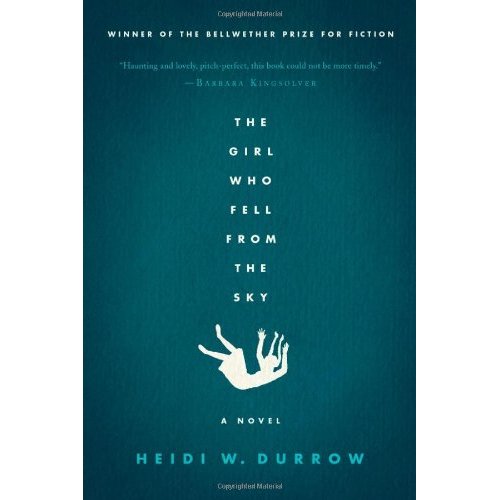
Heidi Durrow is one of the founders of the Mixed Roots Film and Literary Festival (see Links page), and the Mixed Chicks Chat podcast. Her book won the Bellweather Prize for fiction, anf was just published this year. It’s a gem of a novel, please pick it up and support it!
Synopsis from Mixed Roots Festival site:
This debut novel tells the story of Rachel, the daughter of a Danish mother and a black G.I. who becomes the sole survivor of a family tragedy. With her strict African American grandmother as her new guardian, Rachel moves to a mostly black community, where her light brown skin, blue eyes, and beauty bring mixed attention her way. Growing up in the 1980s, she learns to swallow her overwhelming grief and confronts her identity as a biracial young woman in a world that wants to see her as either black or white. Meanwhile, a mystery unfolds, revealing the terrible truth about Rachel’s last morning on a Chicago rooftop. Interwoven are the voices of Jamie, a neighborhood boy who witnessed the events, and Laronne, a friend of Rachel’s mother. Inspired by a true story of a mother’s twisted love, The Girl Who Fell from the Sky reveals an unfathomable past and explores issues of identity at a time when many people are asking “Must race confine us and define us?
Words:
“I am light-skinned-ed. That’s what the other kids say. And I talk white. I think new things when they say this. There are a lot of important things I didn’t know about. …They tell me it is bad to have ashy knees. They say stay out of the rain so my hair doesn’t go back. …They have a language I don’t know but I understand” (10).
“…they way they say that – white girl – it feels like a dangerous thing to be” (28).
“I think about the things that made Pop feel alone, right in front of us, his own family. …He never told he was black. He never told us that we were” (80).
“That makes me think of how the other black girls in school think I want to be white. They call me an Oreo. I don’t want to be white. Sometimes I want to go back to being what I was. I want to be nothing” (148).
“I forget that being what you are – black or white- matters. Jesse makes me see that there’s a different way to be white. And Brick makes me see there is a different way to be black” (202).
This is Part Two of a four-part interview done with Durrow by a youtube commentator on mixed race.
This is one of my all-time favorite books. It was the first book I ever read concerning the experiences of a mixed race person, and what inspired me to seek out further mixed race literature. The corners of the pages of my copy are soft and frayed; the cover, bent and scratched, the spine, long ago cracked.
An Official Synopsis from Amazon:
The Color of Water tells the remarkable story of Ruth McBride Jordan, the two good men she married, and the 12 good children she raised. Jordan, born Rachel Shilsky, a Polish Jew, immigrated to America soon after birth; as an adult she moved to New York City, leaving her family and faith behind in Virginia. Jordan met and married a black man, making her isolation even more profound. The book is a success story, a testament to one woman’s true heart, solid values, and indomitable will. Ruth Jordan battled not only racism but also poverty to raise her children and, despite being sorely tested, never wavered. In telling her story–along with her son’s–The Color of Water addresses racial identity with compassion, insight, and realism.
Words:
“When I asked [my mother] where she was from , she would say, ‘God made me,’ and change the subject. When I asked her if she was white, she’d say, ‘No, I’m light-skinned,” and change the subject again.” (21).
“There was a part of me that feared Black Power very deeply for the obvious reason. I thought black power would be the end of my mother. …It frightened the shit outta me, I thought to myself, these people will kill mommy. Mommy, on the other hand, seemed unconcerned.” (27).
“[Mommy] viewed the civil rights achievements of African Americans with pride, as if they were her own. And she herself occasionally talked about ‘the white man’ in third person as if she had nothing to do with him, and in fact she didn’t, since most of her friends were black women from church” (32).
“I had what black folks called ‘good hair’ because it was curly as opposed to nappy. I was light-skinned or brown-skinned, and girls thought I was cute despite my shyness. Yet I myself had no idea who I was” (91).
” ‘Am I black or white?’ ‘You’re a human being,’ she snapped. ‘Educate yourself or you’ll be a nobody!’ ‘Will I be a black nobody or a white nobody?’ ‘If you’re a nobody,’ she said dryly, ‘it doesn’t matter what color you are’ ” (92).
“The question of race was like the power of the moon in my house. It’s what made the river flow…but it was a silent power, intractable, indomitable, indisputable, and this, completely ignorable” (94).
“They were all trying to be American, you know, not knowing what to keep or leave behind. But you know what happens when you do that. If throw water on the floor, it will always find a hole, believe me” (135).
Here’s a video of him speaking at the 2008 National Book Festival, speaking about Obama, his other book (Miracle at St. Anna), and his journey:
This thriller novel follows an unnamed narrator who is often mistaken for white (though a person of mixed race), as she begins a new internship in New York City where she sublets an apartment with the guidance of a new friend, Greta. Her friend, an older woman, is also mixed and clings to her as their relationship develops. As the relationship gets too invasive by the narrator’s standards, she breaks off the friendship, only to find out that the now crazy Greta is actually Vera, the owner fo the apartment. The narrator is held hostage while the Greta/Vera character gripes about her experience before the ending plot twists. The longest quote is from the aforementioned scene. The book has a lot of gritty, realistic dialogue.
[Greta]: “I hate that all the black men with brains or money are looking for white p***y to validate them, and all the white dudes treat me like I’m a goddamned vacation from their real life. …I hate all those nappy-haired b***hes who gave me such hell growing up ’cause I had light skin and long hair and they didn’t. …I mean, we are the most extreme mother f***ers on the planet – we’re either geniuses or idiots” (152).
[Jarvis]: “Mulattoes these days are all ordinary and well adjusted. Even a little boring…almost makes you miss the old head cases” (202).
[Greta]: “It a good game, this thing we do. I can become whoever the fuck people want me to be. I can switch from ghettoese to the Queen’s English at the drop of a dime. I can shake my ass and do the fucking fox trot. I can make a white man feel like he’s with the most bodacious black girl alive, all earthy brown sugar and grits, and I can make a brother feel like he’s got the whitest white girl beneath him. …It gets tiring, and after a while, you’re moving so fast, just to survive this game, you forget who you really are” (203).
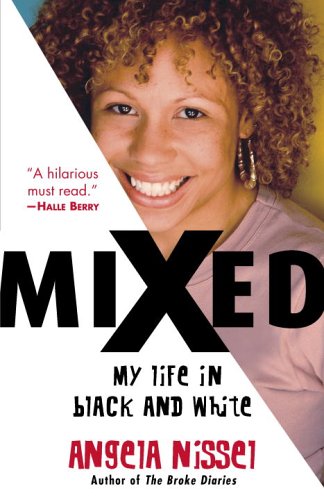
What: Witty and spirited account of Nissel’s mixed race experience from childhood through college, (and a trip to a psych hospital). Nissel alludes to the idea of the “tragic mulatto,” poking fun at it while she describes her quest for popularity in elementary school – having to choose one group of girls over another in segregated private schools.
“I was horrified but at the same time grateful that my half-white side saved me from being lumped with black people. I became determined to use that side as an all-access pass to the world of real Barbies and pain-free hair as long as I could” (39).
“I stayed in the backseat, wondering if being half-white was some kind of hidden superpower, one you only pulled out in times of danger. When was I supposed to hide it? With black schoolgirls? How come one drop of white blood doesn’t make you white? Who made these rules, anyway, and why couldn’t I get a copy of them?” (80).
“I didn’t want to have a mother-daughter mulatto moment like the ones we had after the ‘zebra’ teasings and he your-dad-isn’t-white scuffles. I didn’t want another race lesson or an analysis of how crazy everyone else was and how special I was. I wanted out of the race game. It seemed every time I learned the rules, someone changed them on me. I was tired of fighting…” (98).
“Even though I don’t go through the agony of my formative years by trying on different races and religions in response to people’s perceptions of me, I still have a bit of racial schizophrenia. When I’m with my family, I’m a black girl…at home, I chose to be racially neutral at times…” (232)
I picked up this book knowing I would be challenged. The title itself presents a category I find troubling, considering the historical context of the word “colored.” The book is broken into four main chapters: “The Rainbow People of God,” “The Blessings of the One-Drop Rule”, “The Curses of the Amorphous Middle Status,” and “Thou Shalt Not Racially Classify.” In the beginning chapters, Spencer does exactly what I expected – he claims awareness of the opinions of multiracial people, but presents his strong views against a “multiracial movement,” using his observations as a professor in South Africa as the foundation for his analysis. It is important to note that this book was written in 1997, as the debate about creating a multiracial category on the Census gained momentum. What we now know, of course, is that instead of an exculsive multiracial category, people are allowed to check more than one racial classification. This outcome is the one most favorable to Spencer in his closing statement. I disagreed with a lot of what his he to say leading up to the ‘check more than one box’ idea; which is a solution that is beneficial (and considered a victory among multiracial people) so far. However, he does bring up points that are important to critically analyze in order to have an educated opinion on the issue. I have put in bold the statements I find most beneficial to further examine.
“In addition to the discrimination that mixed race blacks suffer from the internalized racism common to all people of color, mixed race people have suffered from a history of discrimination resulting from the deeply rooted fear of miscegenation in American society” (37).
“Despite the fact that black children are sometimes cruel to mixed race black children and the black community is sometime tentative about mixed race adults, there is a measure of acceptance in the black community that is rarely matched by whites” (55).
“…it makes sense that the one-drop rule would be viewed…as a necessity. It makes sense not simply for the sake of mixed race blacks having a ‘steady home’ but for the sake of the black community being able to maintain a healthy cohesiveness” (57).
“But if we believe that mixed race people represent the need for a new social consciousness that would permit greater fluidity in people’s racial identities and therefore more racial tolerance…then what alternatives are there for mixed race people in terms of their racial identification?” (142).
“The problem is that mixed race people do not feel like full American citizens because of the discrimination they have historically faced as a result of the persistent old fashioned ideas about miscegnation. Perhaps this is why [they] are pushing for a multiracial identity rather than for the right to call themselves American” (143).
“For the multiracial ideal to work…it must be open to all mixed people – anyone at all who owns up to being racially mixed. It is only with the broadest definition of multiracial that the multiracialists could possibly meet their own ideal of everyone recognizing their multiraciality, their human oneness” (156).

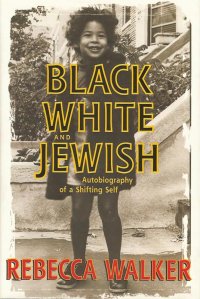 The daughter of Alice Walker and Mel Levanthal, Rebecca grew up between city and suburban neighborhoods after her parents divorced. She tries to negotiate her identity as she passes through these places, through different friends and lovers, and through others’ perception of who she should be. Her writing is so fluid, and accessible that it is very easy to place yourself in her narrative. I embraced the experiences she describes and felt the growth she writes about in adulthood. Walker is explicit about her feelings in every situation that deals with race; the reader must navigate the narrow path of mixed-ness with her, and is forced to understand.



 Mixed Reader